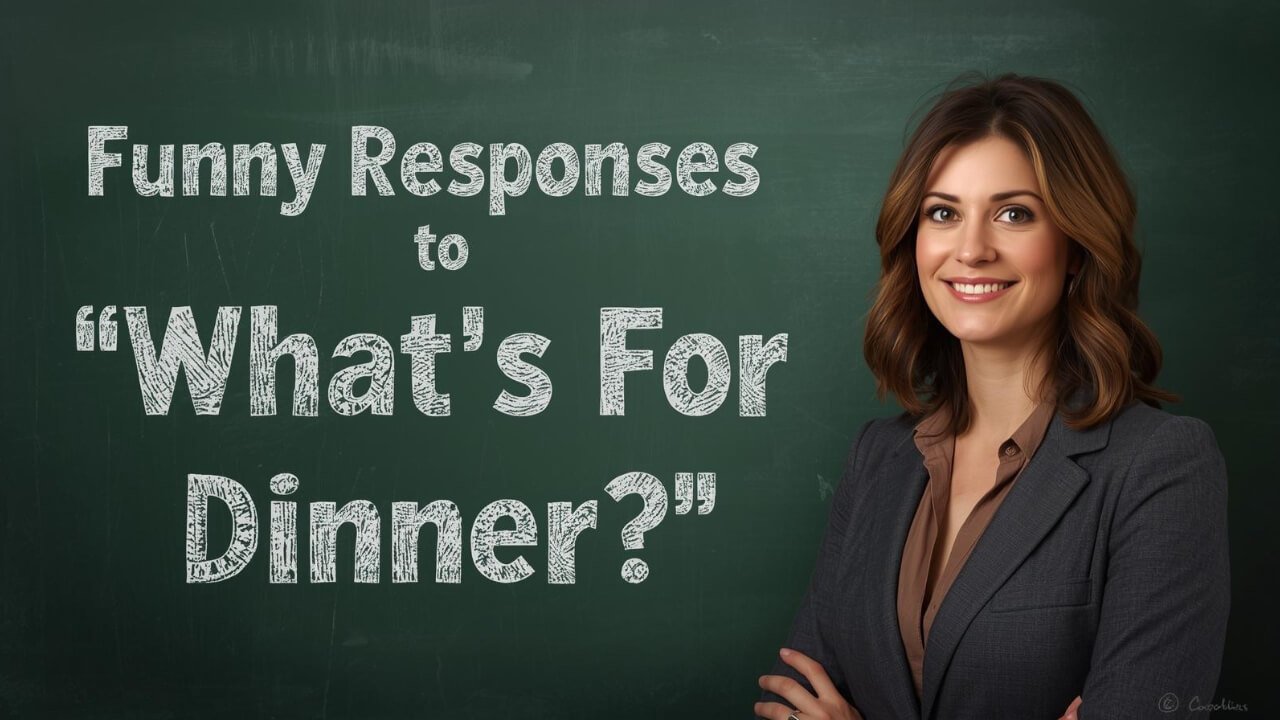

Dinner questions can arrive when the kitchen is busy, the stomach is loud, and everyone expects a quick answer. Funny responses to what’s for dinner make that everyday moment more entertaining without turning mealtime into a serious discussion. These replies fit family meals, casual talks, cooking plans, food cravings, hungry moods, and kitchen confusion.
A good answer can mention leftovers, snacks, mystery meals, chef energy, empty plates, or dramatic hunger in a light way. With the right response, even a simple dinner question can become a warm, relaxed, and memorable part of the conversation tonight for everyone at home nearby.
The Benefits of Choosing Funny Responses To “What’s For Dinner?”
- Makes Mealtime Lighter: A funny answer can turn a normal food question into a relaxed and happy moment.
- Reduces Kitchen Pressure: You can reply without feeling forced to explain every cooking plan.
- Adds Personality: A simple dinner response can show your mood, wit, and natural speaking style.
- Keeps Conversation Warm: These replies help make family talk or casual chatter feel more enjoyable.
Funny Responses To “What’s For Dinner?”

Mealtime questions can sound simple, but they often appear before anyone has a real plan. A light answer can make hungry people smile while the kitchen situation is still unclear. Whether dinner is cooking, delayed, confusing, or completely imaginary, a funny reply keeps the mood relaxed. It also gives you a quick way to handle food cravings, empty plates, leftovers, kitchen stress, and family chatter without making the answer feel too serious.
1. Tonight we are serving whatever survives the fridge inspection.
This response makes dinner sound like a brave kitchen discovery.
2. Dinner is a surprise, mostly because I do not know either.
This reply keeps the answer honest and amusing.
3. We are having patience with a side of hope.
This comeback works well when food is not ready yet.
4. The menu says ask again after my stomach makes a decision.
This response turns hunger into the boss of dinner.
5. Tonight’s special is whatever requires the least effort.
This reply fits tired evenings when cooking feels impossible.
6. We are eating something hot, unless the plan gets lazy.
This comeback gives a funny answer without naming a meal.
7. Dinner is currently in the thinking stage.
This response makes the meal sound like a serious project.
8. We are having mystery food with optional confidence.
This reply makes unknown dinner plans feel more entertaining.
9. The chef is emotionally unavailable right now.
This comeback works when nobody wants to cook.
10. Dinner will be ready when hunger signs the agreement.
This response gives a dramatic answer to a simple question.
Rude Responses To “What’s For Dinner?”
Not every dinner question deserves a soft answer, especially when someone asks while doing nothing to help. A rude response can sound sharp, impatient, and direct while still fitting everyday kitchen talk. Use these lines when the question feels lazy, repeated, or annoying. They work for hungry moods, cooking stress, empty plans, and people expecting service without effort. Keep the tone controlled so the reply sounds bold, not too harsh for normal conversation.
1. Whatever you cook after asking that question again.
Kitchen responsibility lands right back where the question came from.
2. Your guess is as useful as your help.
Sharp wording makes the lack of effort very clear.
3. Food, unless you plan to complain before tasting it.
Dinner gets defended before the first plate even appears.
4. Something edible, which is more than your attitude deserves.
Bold energy turns the question into a quick reality check.
5. Whatever appears after someone stops asking and starts helping.
Direct pressure pushes the person toward actual kitchen work.
6. Hunger, since nobody volunteered to cook.
Simple annoyance makes the missing effort impossible to ignore.
7. Leftovers, because effort left the building earlier.
Dry wording gives the meal plan a tired and irritated tone.
8. Silence, if you ask me one more time.
Firm delivery makes the repeated question feel risky.
9. Nothing fancy, especially for unpaid food critics.
Restaurant expectations get shut down with a sharp kitchen line.
10. Whatever I decide, since you brought only questions.
Control stays with the person doing the real work.
Read Also:
Sarcastic Responses to “You’re Funny”

Sarcastic Responses To “What’s For Dinner?”
Dinner questions become extra dramatic when everyone is hungry, nobody has ideas, and the kitchen looks like it needs a meeting. Sarcastic responses to what’s for dinner help you answer with dry wit instead of plain frustration. They fit tired evenings, empty fridge moments, cooking delays, picky eaters, and repeated asking. Each reply keeps the mood sharp but manageable, giving you a way to respond without writing a full menu or explaining your entire meal plan.
1. A five star meal made from stress and whatever is left.
Grand expectations meet the honest reality of a tired kitchen.
2. Something rare, cooked by the power of my last nerve.
Kitchen pressure gets turned into a dry and dramatic answer.
3. We are having your favorite dish, decision fatigue.
Meal planning sounds like the real main course here.
4. Dinner is whatever stops everyone from asking me questions.
Hungry curiosity gets answered with sharp mealtime honesty.
5. Tonight’s menu includes patience, served slightly burnt.
Cooking delays become part of the meal in a dry way.
6. Food, unless the fridge files a complaint first.
Fridge uncertainty makes the answer feel amusing and doubtful.
7. We are eating whatever looks least suspicious.
Mystery leftovers become the star of the evening plan.
8. Something homemade, if opening containers counts as cooking.
Low effort dinner gets a sarcastic kitchen upgrade.
9. The meal is invisible because planning also disappeared.
Empty dinner plans get described with dry confidence.
10. We are having suspense with a side of hunger.
Delayed food turns into a dramatic dinner experience.
Cool Responses To “What’s For Dinner?”
A smooth dinner reply can make the whole table feel more relaxed before the meal even starts. Cool responses to what’s for dinner work best when you want an answer that sounds calm, casual, and confident. They fit busy evenings, simple meals, last minute plans, hungry questions, and relaxed kitchen moments. Instead of sounding stressed, you can answer with easy style, making food talk feel light while keeping the mood steady and comfortable.
1. Tonight we are keeping it simple and satisfying.
Smooth wording makes the meal sound easy without giving too much detail.
2. Something good enough to stop the questions.
Calm confidence gives the answer a stylish little edge.
3. We are going with whatever feels right after one deep fridge look.
Relaxed timing makes the dinner plan sound casual and natural.
4. Dinner is under control, even if the menu is still deciding.
Steady delivery keeps the kitchen mood cool and calm.
5. Something warm, easy, and worth sitting down for.
Gentle confidence makes the meal sound comforting without overexplaining.
6. The kind of food that fixes a long day.
Simple wording gives the answer a relaxed and satisfying feel.
7. We are making hunger wait for something decent.
Confident pacing turns the delay into part of the plan.
8. Something that tastes better than the question sounds.
Dry style gives the reply a cool and slightly sharp tone.
9. Dinner is coming with calm energy and full plates.
Balanced wording makes the answer feel peaceful and reassuring.
10. Whatever lands on the table is the official plan.
Easy confidence makes the final answer sound settled and casual.
Savage Responses To “What’s For Dinner?”
Bold dinner answers work best when the question keeps coming from someone who has no plan to help. Savage responses to what’s for dinner can sound sharp, confident, and funny without needing a long explanation. They fit repeated questions, lazy kitchen talk, empty fridge moments, picky comments, and hungry attitudes. Use them when you want the reply to land fast, protect your patience, and remind everyone that cooking is not magic on demand.
1. Whatever you earn after contributing zero effort.
Kitchen effort becomes the main ingredient in this sharp reply.
2. Food, unless your attitude ruins the appetite first.
Sharp delivery makes the question feel less welcome.
3. Something beyond your cooking skills, clearly.
Bold wording turns the dinner question into a quick roast.
4. The same thing you planned, which is nothing.
Dry honesty points straight at the missing help.
5. Whatever I make, since complaints are not ingredients.
Kitchen control stays with the person doing the actual work.
6. Dinner is patience, but yours seems undercooked.
Sassy timing makes the hunger complaint sound childish.
7. Something edible, which is already more than your plan.
Direct wording makes the empty contribution impossible to miss.
8. Your options are gratitude or the kitchen door.
Firm attitude turns the meal question into a boundary.
9. Whatever is cooked by someone with initiative, so not you.
Savage energy makes the lack of action stand out.
10. Tonight’s special is mind your plate and be thankful.
Final wording shuts down complaints before they reach the table.
Best Responses To “What’s For Dinner?”
Good dinner answers can make hungry questions feel simple, warm, and easy to handle. Best responses to what’s for dinner should sound natural, clear, and relaxed without creating pressure in the kitchen. They fit family meals, quick cooking plans, comfort food, tired evenings, and shared table moments. A balanced reply can manage expectations, keep conversation friendly, and make the meal feel worth waiting for, even when the menu is still coming together.
1. Something warm, filling, and worth sitting down for.
Comforting words make the meal sound satisfying and ready to enjoy.
2. Dinner is whatever brings everyone to the table happy.
Friendly meaning gives the answer a caring and welcoming tone.
3. We are having a simple meal with good company.
Natural phrasing makes the dinner plan feel calm and pleasant.
4. Something tasty enough to make the wait feel fair.
Clear confidence turns the delay into part of the evening.
5. Tonight’s plate is comfort, care, and a little kitchen effort.
Warm detail makes the answer feel thoughtful without naming the dish.
6. We are eating whatever makes hunger finally behave.
Fun wording gives the question a light and easy answer.
7. Something fresh from the kitchen and ready for hungry people.
Bright wording keeps the reply clear, useful, and positive.
8. Dinner is a good meal with no extra drama.
Simple confidence makes the answer feel steady and reassuring.
9. We are serving food that should make everyone quiet for a minute.
Cheerful delivery turns the meal into a small peaceful victory.
10. Something made with effort, so bring your appetite.
Strong wording makes the dinner plan sound inviting and complete.
Flirty Responses To “What’s For Dinner?”
A sweet dinner question can turn into a warm little moment when the answer carries charm. Flirty responses to what’s for dinner work well when you want the mood to feel light, cozy, and slightly romantic. They fit date nights, kitchen talks, shared meals, hungry smiles, and casual teasing. Instead of giving a plain menu, you can answer with interest, warmth, and confidence while making the conversation feel more personal and enjoyable.
1. Whatever tastes better when you sit beside me.
Warm charm makes the meal feel connected to the person asking.
2. I was thinking dinner first, then maybe your smile for dessert.
Soft teasing adds a romantic feeling without sounding too serious.
3. Something good, but your company is the main course.
Sweet wording makes the person feel important in the moment.
4. I have dinner handled, but you can bring the charm.
Gentle confidence keeps the answer smooth and inviting.
5. Whatever we eat, I hope you are staying close.
Cozy emotion gives the reply a warm and personal tone.
6. Something delicious, unless you distract me first.
Light teasing makes the kitchen moment feel more exciting.
7. Dinner is ready when you promise to sit next to me.
Romantic interest turns a simple meal into a shared plan.
8. I made food, but I saved the best seat for you.
Tender wording makes the invitation feel sweet and thoughtful.
9. Something warm, and maybe a little extra attention for you.
Friendly charm adds softness to the dinner answer.
10. The meal is simple, but the company could make it special.
Calm romance gives the reply a sweet and classy ending.
Cute Responses To “What’s For Dinner?”
Little dinner questions can feel extra sweet when the answer brings warmth instead of plain menu details. Cute responses to what’s for dinner are great for cozy evenings, family chats, shared meals, small cravings, and gentle kitchen moments. They make food talk feel soft, caring, and pleasant while keeping the reply simple. A sweet answer can calm hungry moods, add comfort to the table, and make dinner feel like a small happy moment.
1. Something cozy for your tummy and sweet for your mood.
Soft wording makes the meal feel caring and comforting.
2. Dinner is love in a plate, with extra warmth.
Gentle meaning gives the answer a kind and sweet feeling.
3. We are having something that comes with happy bites.
Cheerful phrasing makes the meal sound light and pleasant.
4. A little food, a little care, and a full smile.
Warm detail turns dinner into a sweet shared moment.
5. Something yummy enough to make your hunger feel hugged.
Cute energy makes the reply feel soft and friendly.
6. Dinner is a small plate of comfort waiting for you.
Cozy wording makes the answer sound calm and welcoming.
7. We are having something tasty with a side of smiles.
Bright language gives the meal a sweet and happy tone.
8. Food made for hungry hearts and happy faces.
Kind expression makes the dinner answer feel warm and simple.
9. Something warm enough to make the evening feel nicer.
Pleasant wording adds comfort without making the answer too serious.
10. Dinner is a tasty little surprise for your hungry soul.
Sweet delivery makes the question feel fun and gentle.
Conclusion
Dinner questions can feel ordinary, but the right answer can make them more fun, warm, or memorable. Funny responses to what’s for dinner help you reply with confidence when people are hungry, curious, impatient, or expecting a full menu. From rude and sarcastic lines to cool, savage, flirty, best, and cute replies, each style gives the conversation a different mood. Use these responses when you want to keep mealtime light, reduce kitchen pressure, and add personality before the food reaches the table. A simple answer can make dinner talk better.
FAQs
What are funny responses to what’s for dinner?
Funny responses are light and witty answers that make a normal dinner question more entertaining.
Can I use these responses with family?
Yes, these responses work well with family when the mood is relaxed and casual.
Are rude dinner responses okay to use?
Rude responses should be used carefully when someone keeps asking or refuses to help.
What type of response is best for dinner questions?
The best response depends on the mood, such as cute, cool, sarcastic, flirty, or savage.
Can these replies make dinner conversation better?
Yes, they can make the moment lighter, reduce stress, and make food talk more enjoyable.